
Probably Stolen fish farming guide: tanks, feeding and harvesting
Start fish farming through Joe Wild, prepare water, power and feed, raise tilapia, and harvest fish meat. Troubleshoot tank care in the Aquafarmer Demo update.
Demo 050-Rev5-L
Version history
- Demo 050-Rev5-L Main guide
Added the complete fish life cycle, tilapia ages and old-age care.
Fish farming arrived in the October 19 Aquafarmer Demo update. Start with tilapia: prepare their tank, hatch fertilized roe and keep the fish supplied while they grow. Harvest surplus fish for meat while keeping breeding stock.
Get the equipment and a supplier
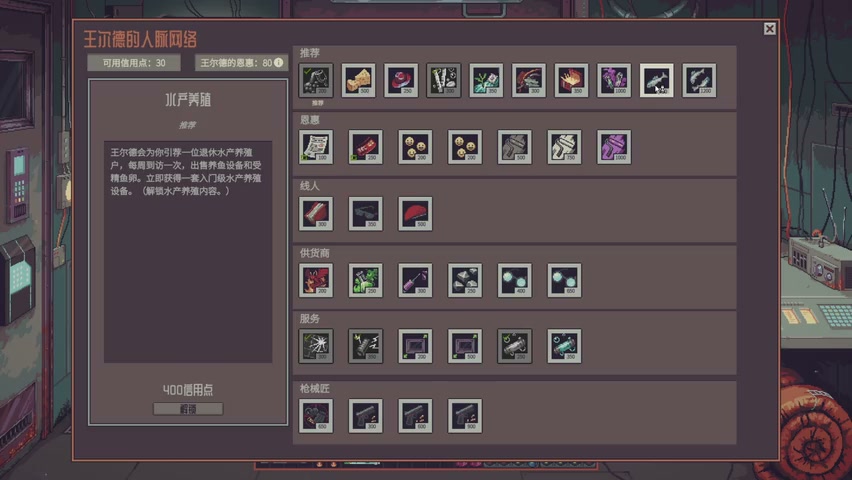
- Open Joe Wild’s network. Unlock Water Trading first, then select Aquaculture and buy the introduction at the price shown in your panel.
- This unlocks the retired aquafarmer, who visits weekly to sell equipment and fertilized roe. The upgrade also gives you an introductory equipment set immediately.
- Open the circulation system and make room for it in your shop. Get a charged energy cell, water and food before putting fish inside.
- Buy fertilized roe from the retired aquafarmer when you need stock. Start with tilapia before expanding into other species.
The Joe Wild starter-kit guide explains how his network works. Aquaculture is a network upgrade; look there when you cannot find a fish seller among your usual customers.
Set up the five parts of the system
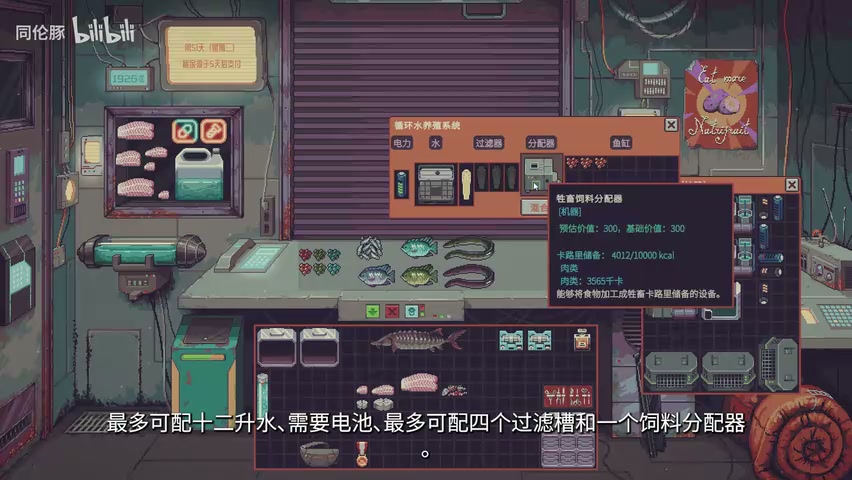
Open the circulation system. Its window has five areas:
| Area | What to put there or check |
|---|---|
| Power | A charged energy cell. Check the system’s current daily energy requirement. |
| Water | Fit an RAS Water Tank in the water area, then fill it in place. It stays installed. Compare its water with the total required by all fish. |
| Filters | Filters suited to the fish you are keeping. Read the fish’s water requirements before choosing them. |
| Feeder | Food to process into feed. Use the Blend button after adding ingredients. |
| Tank | Your roe, fry and fish. Leave space for growth and offspring. |
Hover over the system to read its water amount, water quality, pollution and energy use. Hover over each fish to read its diet, water requirement, health and hunger. Adding fish changes what the tank must support, so check the totals again after stocking it.
Daily power use depends on the installed setup. Use the current value in the tooltip when selecting a cell. The charging guide covers replacing and recharging cells.
Prepare feed and hatch your first fish
- Put food ingredients into the feeder and press Blend to prepare feed.
- Check the fish’s diet and the feed’s composition. Match the ingredients to the species; different fish have different feeding requirements.
- Supply water and power, then place fertilized roe in the tank.
- Keep the system supplied as the roe hatches into fry and the fry grow into fish. Check their health and hunger after each night.
Industrial Fish Feed is for omnivorous and herbivorous fish; carnivores need meat. Gutterflow Pellets are cheap feed for omnivores, but too large a share of their diet turns the meat into trash grade. Check the pellet warning and recent growth-speed reading when choosing feed. Fish with the Gutterflow Pellet immunity trait do not suffer this meat-quality penalty.
Hover over fertilized roe to see the hatch countdown. Fry show how long remains until they become juveniles. A clutch’s water requirement covers the whole clutch; include it when checking the system’s total.
| Tilapia variety | What to raise it for |
|---|---|
| Tilapia | A fast-growing, easy-breeding starting fish. |
| Gutter Tilapia | Tolerates dirty water and removes heavy metals and chemical contaminants while alive in the tank. Grows more slowly and produces less meat for the same feed. |
| Graft Tilapia | Needs clean water and produces less meat for its feed. Its skin can be sterilized for bandages, and its unfertilized roe has medical uses. |
For breeding, keep mature fish of the same species with both sexes, suitable living conditions and enough food. Leave room for roe and fry. Fertilized roe continues the cycle; selling or butchering all your adults leaves you dependent on buying replacement stock.
Follow the full life cycle, from roe to elder
Adult is followed by Elder. Fish do not stop aging when they become adults. Read the life stage and countdown in each fish’s tooltip before deciding which fish to keep or harvest.


| Life stage | What changes and what to do |
|---|---|
| Fertilized roe | Keep the clutch in a supplied tank until it hatches. Unfertilized roe does not hatch. |
| Fry | A group of tiny fish shares one item. Count the water requirement of the whole group and leave room for individual fish. |
| Juvenile | The fry become individual fish. Check each fish’s sex, weight, hunger and water requirement. |
| Adolescent | Continue feeding and allow for greater water needs. Electric eels begin producing power at this stage when fed. |
| Adult | Tilapia can breed with a fed adult or elder of the same variety and the opposite sex. Keep replacement breeding stock. |
| Elder | This is the final life stage. A separate old-age countdown tells you when nightly death risk begins. An elder can still breed while alive and sufficiently fed. |
Tilapia stage timings
These are starting fish ages, counted from fertilized roe, rather than dates in your save. A fish bought or received partway through its life already has an age; use its tooltip to see the remaining time.
| Variety | Fry | Juvenile | Adolescent | Adult | Elder | Old-age death risk |
|---|---|---|---|---|---|---|
| Tilapia | 1 | 3 | 5 | 8 | 13 | 27 |
| Gutter Tilapia | 1 | 3 | 6 | 10 | 16 | 33 |
| Graft Tilapia | 1 | 3 | 5 | 8 | 13 | 27 |
All ages are in game days. Other species have their own timings. Becoming an elder is separate from reaching the old-age risk shown in the last column: an ordinary tilapia becomes an elder at age 13, but its old-age death risk starts at 27.
Plan breeding and harvesting before old age
Keep raising a healthy adult if you need breeding stock or more growth, and use its current weight and meat yield to judge a harvest. Food affects growth, so age alone does not tell you how much meat you will receive. Keep a younger pair ready before retiring your oldest breeders.
Once the tooltip warns “Old age: may die any night,” the fish can die overnight even with food and water available. Harvest fish you intend to sell for meat before relying on another night of growth. An elder that has not reached this warning is not on a fixed last-day countdown.
Check the tank before sleeping
Work from the system’s supply totals to each fish’s condition:
| Check | What to do |
|---|---|
| Are all live fish inside the tank? | Return fish you moved onto the counter while inspecting or sorting them. |
| Is there enough water for the current stock? | Add water or move some fish to another prepared tank. |
| Does the water suit this species? | Check its habitat requirements, the installed filters and the system’s pollution reading. |
| Is suitable feed available? | Refill and mix ingredients, then check the resulting feed and fish hunger. |
| Can the cell run the system? | Replace an empty cell and compare its charge with the displayed daily use. |
| Is there room for young fish? | Move surplus stock before expanding the breeding group. |
If health or hunger worsens overnight, compare these readings before adding more fish. Fix the shortage first; increasing stock raises the care required.
Harvest meat and keep breeding stock
Use a knife to slaughter and butcher fish for meat. Separate the fish you want to keep from the surplus before using the tool, then sell the meat through your shop.
Keep some healthy adults for breeding and space for the next generation. Plan tank size around both your current fish and the young you intend to raise.
Sturgeons also produce caviar. Use Surgery Toolset on a live sturgeon to harvest it. Check the fish’s health and roe information before planning another harvest; recovering fish need time before producing again.
Expand into other species
Aquaculture II is the next network tier after I. Review its panel when you are ready for more equipment and species.
Eels and sturgeons have their own habitat and feeding requirements. Their tooltips state that they cannot be bred artificially, so plan replacement stock through the supplier. Establish a working tilapia tank before committing space and supplies to them.
An Electric Eel has a different role from an ordinary eel: from adolescence it charges its system and each adjacent battery every night. A starving electric eel produces no power, so keep it fed and check its life stage before relying on it.
Related guides
Related Articles
Wiki
Appraiser Board
Meet Appraiser Board: learn about their visitors, trading or services, faction relationships and the guides for dealing with them.
Wiki
Appraiser Board Member
Read about Appraiser Board Member, their identity, visits, goods and services, with links to related people, organizations and guides.
Wiki
Black Market
Understand the Black Market, its thieves, reputation benefits and trading channels. Find the guides for attracting sellers and hiding risky goods.
Was this helpful?
Thanks for the feedback!