
BloomBerry Wine Fermenting Guide
BloomBerry Wine Fermenting Guide: Water and berry quantities, standard yeast, fermentation and berry identification.
Demo 049-Rev5-L
Version history
- Demo 049-Rev5-L Main guide
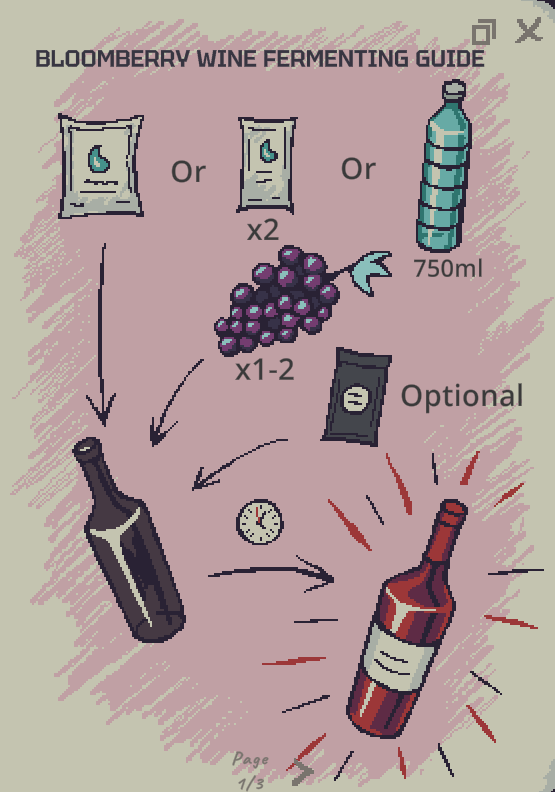
The first-page diagram combines 750 mL of water, one or two handfuls of BloomBerry and optional standard yeast in a wine bottle, then shows waiting for fermentation. The water can come from one large pouch, two small pouches or a bottle.
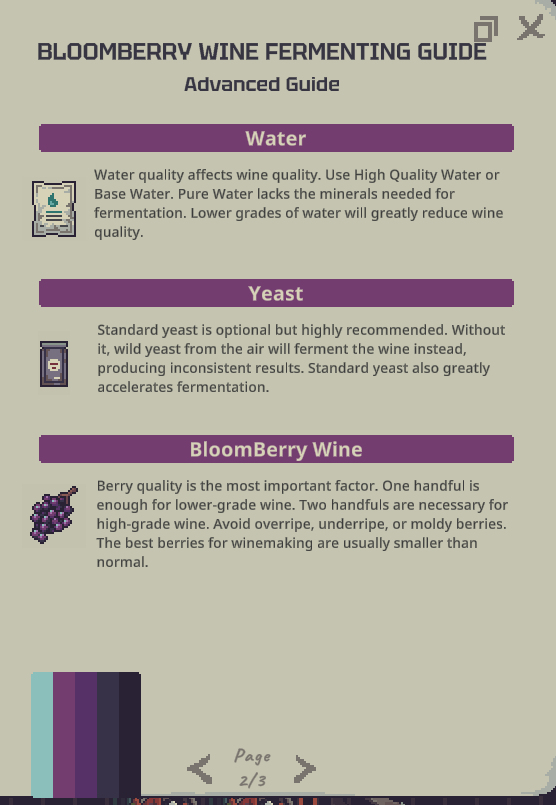
Advanced Guide
Water
Water quality affects wine quality. Use High Quality Water or Base Water. Pure Water lacks the minerals needed for fermentation. Lower grades of water will greatly reduce wine quality.
The manual’s water recommendation is preserved here. In Demo 049-Rev5-L, Pure Water and High Quality Water each add +1 to the native wine score, while Base Water adds 0. See the wine guide for the version-specific scoring.
Yeast
Standard yeast is optional but highly recommended. Without it, wild yeast from the air will ferment the wine instead, producing inconsistent results. Standard yeast also greatly accelerates fermentation.
BloomBerry
Berry quality is the most important factor. One handful is enough for lower-grade wine. Two handfuls are necessary for high-grade wine. Avoid overripe, underripe, or moldy berries. The best berries for winemaking are usually smaller than normal.
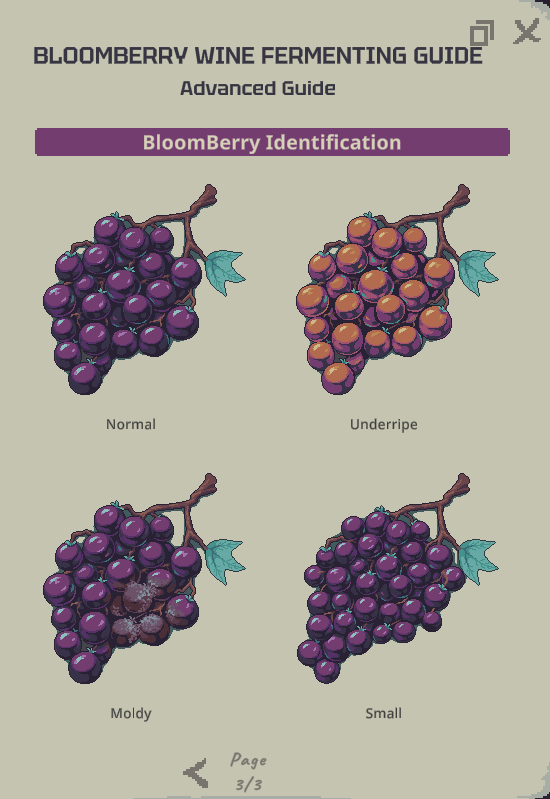
BloomBerry Identification
The original illustrations show normal berries in dark purple, underripe berries in orange, moldy berries with grey-white patches, and the small variety with noticeably smaller fruit.
Related pages
Related Articles
Wiki
Appraiser Board
Meet Appraiser Board: learn about their visitors, trading or services, faction relationships and the guides for dealing with them.
Wiki
Appraiser Board Member
Read about Appraiser Board Member, their identity, visits, goods and services, with links to related people, organizations and guides.
Wiki
Black Market
Understand the Black Market, its thieves, reputation benefits and trading channels. Find the guides for attracting sellers and hiding risky goods.
Was this helpful?
Thanks for the feedback!