
Probably Stolen wine guide: BloomBerries, water and yeast
Make Master Vintage with small berries, Basewater and yeast in two days. Compare ingredient scores and recipes, the +6 quality cap and why +8 adds no new tier.
1.0
Version history
- 1.0 Main guide
Added natural aging, AgeWell acquisition and use, total aging per night and the Master Vintage value modifier.
How do you start your first bottle?
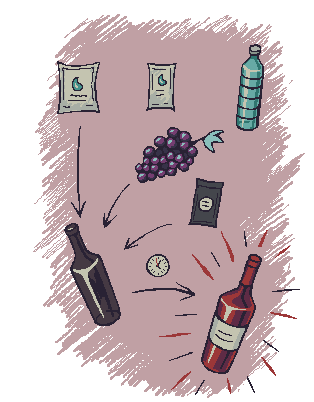
- Prepare a Wine Bottle and BloomBerries. One handful makes lower-grade wine; aim for two good handfuls for high-grade wine.
- Add High-Quality water or Basewater. Standard yeast is recommended.
- Choose “Start Fermenting” in the bottle interface. Top up water or ingredients if the interface says there isn’t enough.
- Check the displayed days remaining and wait for the batch to finish.
Berry quality matters most. Pick good fruit first, then check your water and yeast. High-grade wine needs two handfuls, and the fruit’s condition still matters.
After fermentation, follow wine aging to compare holding the finished bottle with using an AgeWell.
Which BloomBerries should you use?
The manual says the best winemaking berries are usually smaller than normal. Set aside overripe, underripe and moldy fruit, then compare the normal and small examples below.
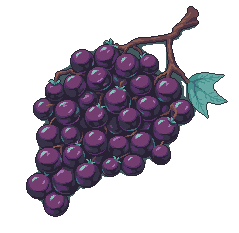
Prioritize these. The best winemaking berries are usually small.
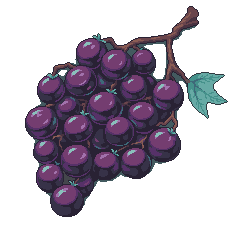
Use this example to compare berry size and condition.
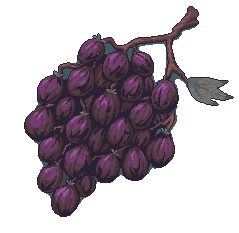
The manual recommends avoiding overripe berries.
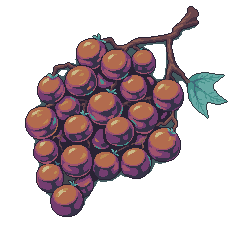
Not ripe yet. Leave these out of your wine.
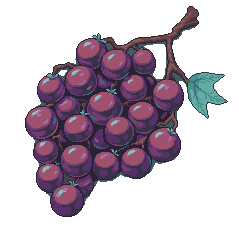
Another underripe appearance to watch for when choosing fruit.
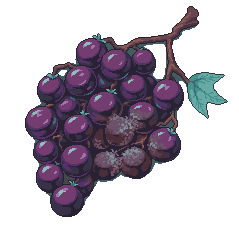
Keep moldy fruit out of the batch.
Which water makes good wine?
High-Quality water and Pure Water both add 1 point; Basewater adds 0. Lower grades subtract points. With two handfuls of small berries and standard yeast, Basewater is enough for Master Vintage.
The manual warns that Pure Water lacks fermentation minerals. In the full release’s actual quality scoring, however, Pure Water scores the same as High-Quality water, with no additional mineral penalty.
Test the water you already have before treating it. The water-quality guide explains the six grades and testing tools. For winemaking, aim for the right grade for fermentation.
Which bottle and yeast should you prepare?

Wine Bottle: a fermenting container with an airlock
This bottle has an integrated airlock and is made for fermentation. Once the ingredients are ready, start fermentation in its interface and check the remaining time there.

Standard yeast: recommended for your first batch
Ferments a batch in 2 days and adds 1 quality point in ordinary brewing. Without yeast, the batch takes 4 days and misses that point.

Super Yeast: much faster fermentation
Ferments a batch in 1 day, compared with 2 days for standard yeast. Both add the same 1 quality point in ordinary brewing.

Yeast Bioreactor: use it again for the next bottle
Ferments a batch in 2 days and adds 1 quality point, like standard yeast. When fermentation starts, it returns to your inventory instead of being consumed, ready for another batch.
Compare bottle and yeast values in the item and base-price reference before buying supplies.
How do you improve wine quality? Does +8 unlock a higher grade?
To make Master Vintage, the highest quality grade, use two handfuls of small berries + Basewater + standard yeast. This recipe scores exactly 6, reaching the top grade.
How many points does each ingredient add?
For ordinary brewing, the total is all berry scores + the water score + the multi-berry bonus + the yeast bonus. More than one handful gives a single +1 quantity bonus. Standard yeast, Super Yeast or a Yeast Bioreactor adds another +1.
| Berry appearance | Points per handful |
|---|---|
| Small | +2 |
| Normal | +1 |
| Underripe (either appearance), overripe | 0 |
| Moldy | −1 |
Small berries add one more point per handful than Normal berries. Two small handfuls let you reach the top grade with Basewater; one Normal and one small handful need High-Quality or Pure Water and yeast.
| Water grade | Points |
|---|---|
| Pure Water, High-Quality water | +1 |
| Basewater | 0 |
| Ghostwater | −1 |
| Rustwater | −2 |
| Gutterflow | −3 |
How does the score determine the wine grade?
| Total score | Wine quality |
|---|---|
| 0 or below | Undrinkable |
| 1 | Bucket Brew |
| 2 | Homebrew |
| 3–4 | Production Wine |
| 5 | Reserve |
| 6 or above | Master Vintage |
Which recipes reach Master Vintage?
All three recipes reach the highest grade:
| Recipe | Score calculation | Total |
|---|---|---|
| Two handfuls of small berries + Basewater + standard yeast | Berries 2+2, water 0, quantity bonus 1, yeast 1 | 6 |
| One Normal handful + one small handful + High-Quality or Pure Water + standard yeast | Berries 1+2, water 1, quantity bonus 1, yeast 1 | 6 |
| Two handfuls of small berries + High-Quality or Pure Water, without yeast | Berries 2+2, water 1, quantity bonus 1 | 6 |
With Basewater and standard yeast, use the first recipe for a 2-day fermentation. Without yeast, choose the third recipe and allow 4 days.
Two Normal handfuls with High-Quality water and standard yeast score 5: Reserve. Replace one Normal handful with small berries to reach 6. With one Normal and one small handful, switching from Basewater to High-Quality or Pure Water also raises the score from 5 to 6.
Why did three premium berries still produce Master Vintage?
In a Steam discussion about a +8 wine score, a player calculated a theoretical +8 from three premium handfuls and water. After brewing, they reported getting Master Vintage.
Every score of 6 or more reaches the same highest grade. Scores of 7 or 8 do not unlock a higher quality grade. A third handful still adds its own berry score, but the quantity bonus stays at +1. Two handfuls of small berries are enough for Master Vintage; save the third for another bottle.
The bottle holds at most three berry handfuls without yeast. Adding standard yeast, Super Yeast or a Yeast Bioreactor leaves room for at most two handfuls.
Should you switch to Super Yeast or Synthetic Yeast?
- For a shorter wait, use Super Yeast: it adds the same 1 quality point as standard yeast, but finishes in 1 day instead of 2.
- For repeated batches, use a Yeast Bioreactor: it also adds 1 point and returns to your inventory when fermentation starts, ready for the next bottle.
- Synthetic Yeast makes a different kind of wine: it needs only water to produce cheap, mildly carcinogenic contraband wine. It is outside the ordinary berry-wine recipes above.
Age finished wine and use an AgeWell
After fermentation has finished, each further night in your shop’s inventory adds one aging day and 3 credits to an ordinary BloomBerry Wine bottle’s base value.

AgeWell: powered aging for finished wine
An AgeWell adds extra aging to the wine inside. One powered night processes the whole load for the machine’s displayed energy cost.
Get the machine and load the wine
Unlock the Retired Winemaker referral, then check Dr. Jackson’s stock when he visits or when you visit his shop. The AgeWell appears in his random stock. The retired winemaker supplies brewing materials; Jackson is the supplier for this machine.
- Finish fermenting ordinary wine and keep it in its original Wine Bottle.
- Open the AgeWell and place the finished bottles in Container. This area is 6×4 cells; each bottle occupies 1×4, so up to six bottles fit upright.
- Fit a charged power source. Without modules, the machine needs 24kJ for a working night, shared by all the loaded bottles.
- Close the shop and sleep. Next morning, hover a bottle to check its Age. Drinkable ordinary wine shows the aging count there.
- Keep aging it, or remove the bottle for sale. Refill the power source for the next working night.
The Container area accepts owned, finished ordinary wine. Empty bottles, fermenting batches, water bottles, counterfeit wine and Synthetic Yeast’s GloomBerry Wine do not meet those conditions. Keep finished wine in its fermentation bottle for aging; pouring it into a water bottle leaves that wine-bottle aging route.
Count natural and extra aging together
The machine adds one extra aging day by default. Each complete 125 points of total module Quality, Q, adds a further day; negative Q counts as zero. Add the bottle’s one natural day to get its total increase:
| Storage and machine Quality | Natural aging | Extra machine aging | Total added per night | Base value added per bottle |
|---|---|---|---|---|
| Ordinary storage | 1 day | — | 1 day | 3 credits |
| Powered AgeWell, Q124 or lower | 1 day | 1 day | 2 days | 6 credits |
| Powered AgeWell, Q125–249 | 1 day | 2 days | 3 days | 9 credits |
| Powered AgeWell, Q250–374 | 1 day | 3 days | 4 days | 12 credits |
Q100 still gives the first machine tier. P and E reduce power at half strength rather than adding aging days; check the displayed power cost after changing modules. With insufficient power, the extra aging is skipped and the bottle keeps its natural day. An empty AgeWell does not draw working power.
Read the quality percentage and aging separately
The +75% beside Master Vintage is that quality grade’s appraisal modifier. Aging raises the base value underneath it; the fermentation score, quality grade and its percentage stay unchanged. Improve the next batch’s grade with the ingredient recipes above. The final sale price also depends on the bottle’s other features and trading conditions.
If a bottle will not fit, check that fermentation is complete, that it is ordinary wine, and that a 1×4 space is free in Container. If its age rises by only one day overnight, check the power slot and charge before buying more Quality modules.
What should you check when a batch goes wrong?
- Fermentation won’t start: read the bottle’s message. Add water if it reports a shortage, or check your ingredients if those are insufficient.
- The batch stopped at Reserve: count Normal berries as +1 and small berries as +2. Check the recipe table, water grade and yeast; you need a total of 6 for Master Vintage.
- Pure Water did not produce the top grade: Pure Water already adds 1 point. Check berry condition and whether you added yeast.
- No yeast available: two handfuls of small berries with High-Quality or Pure Water still reach Master Vintage, with a 4-day fermentation.
Where do winemaking supplies come from?
Unlocking the Retired Winemaker network upgrade immediately gives you a Winemaking Starter Kit. He visits weekly, selling supplies and equipment.
You can keep sorting stock and running the shop while the batch ferments. The beginner guide covers that routine.
How do you fund the next batch?
Joe Wild’s Retired Winemaker referral has a base cost of 200 credits. It gives a starter kit immediately; the supplier visits weekly.
Keep trading while bottles ferment. After selling the wine, set aside money for the next berries, water and yeast. Compare this routine with water and rats in the money-making guide.
Does this guide cover the Moonshiner start?
This guide covers ordinary BloomBerry Wine ingredients and quality. For GloomBerry Wine made from Synthetic Yeast and water, follow moonshine brewing. Moonshiner explains the career, starting equipment and referrals.
An existing shop can obtain bottles, ordinary yeast and berry supplies through the Retired Winemaker referral. See hydroponics for crop and water information.
In-game manuals
Related Articles
Wiki
Lou: toy box, Republic transmitter and difficulty-based demands
Return Lou's box, choose a gift, use the Republic transmitter and resolve her demands. Check difficulty amounts and payment thresholds.
Guides
Probably Stolen achievements: all 21 and unlock routes
All 21 Probably Stolen Steam achievements, with deed conditions, Clean Hands, Rat Wrangler, workshop goals, Steam counters and practical unlock routes.
Guides
Dream Dust and Nightmare Dust: mushrooms, extraction and sales
Grow or buy the right mushrooms, measure alcohol, extract at 45°C, dry and finish both dusts, then choose buyers and uses in Probably Stolen.
Was this helpful?
Thanks for the feedback!